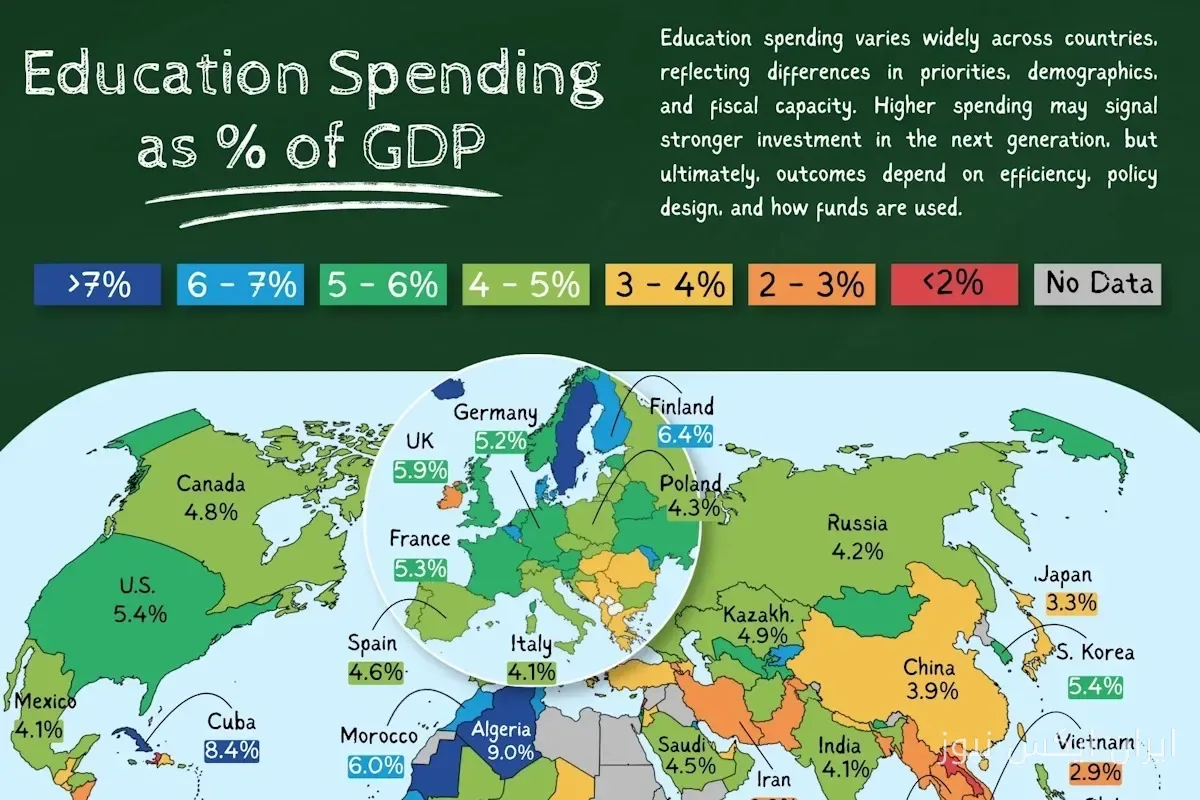
In today's age, investment in education has become one of the key criteria for measuring the economic progress of countries. Expressing educational expenditures as a percentage of gross domestic product allows us to compare countries with different economic dimensions. In fact, these statistics not only reflect the attitudes of various countries towards education, but also clearly reveal the political and social dimensions of each country.
The Role of Policy Making and Demographic Structure
In today's world, regardless of national wealth, government policies and their demographic structures also have a significant impact on the level of investment in the educational system. For example, countries with a young and dynamic population typically feel a greater need to invest in education to prepare a skilled and capable workforce for the future.
On the other hand, in countries facing more economic and social challenges, these investments may significantly decrease. In this context, economic and social policies, especially in lower-income countries, may influence decision-making in education.
Astonishing Statistics
Statistics show that some countries particularly value education and allocate a high percentage of their gross domestic product to this sector. This not only helps improve the quality of education but can also lead to sustainable economic growth for countries. While some countries are leaders in this regard, others still remain at lower levels and require more attention and investment.
In summary, investment in education is not only a tool for improving individuals' quality of life but is also considered a key to the economic and social success of countries. In the near future, observing changes in these statistics may reveal more details about the economic and social status of various countries.