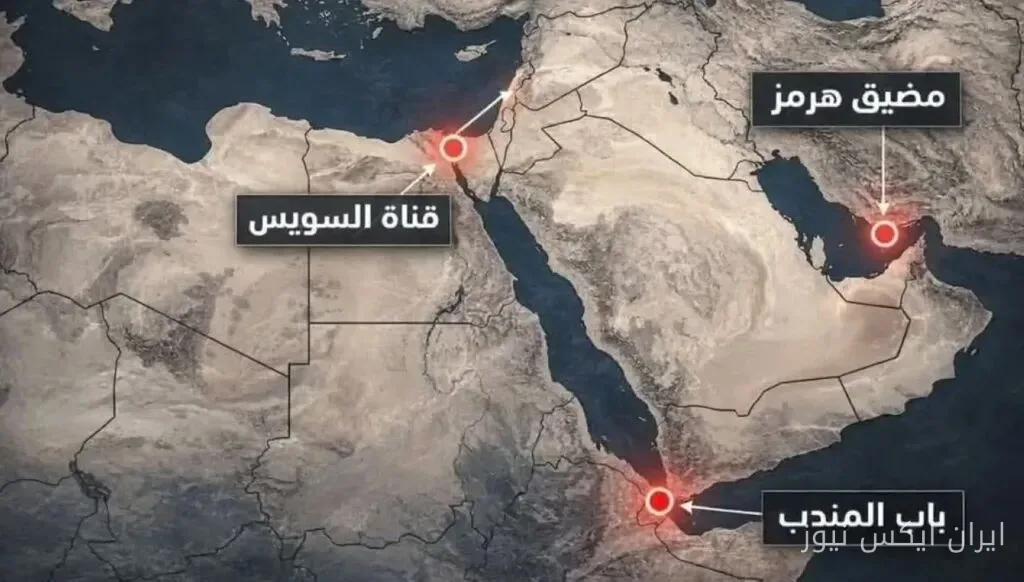
In today's world, the Strait of Hormuz and Bab-el-Mandeb are not only recognized as vital passages for global trade, but they have also become centers of geopolitical transformations. Ahmad Al-Darzi, a Syrian writer, emphasizes their strategic importance and the potential impacts of recent changes on the balance of power in West Asia in a deep analysis of these two regions.
Vital Straits and Global Developments
The Strait of Hormuz, through which about 20 percent of the world's oil passes, is recognized as a symbol of global energy security. On the other hand, Bab-el-Mandeb serves as a gateway to the Red Sea and subsequently to the Suez Canal, playing a very important role in global trade. Recent developments in these two passages could signal the formation of a new path in regional and international policies.
Changes in Power Equations
According to Al-Darzi, changes in these two straits could lead to shifts in the power equations in West Asia. With increasing tensions and rivals in these areas, the possibility of forming new alliances and agreements between countries becomes greater. These changes could benefit some countries and harm others, and for this reason, special attention to developments in these regions is essential.
Ultimately, it must be said that today's world is experiencing unprecedented transformations, and the Strait of Hormuz and Bab-el-Mandeb, as the main centers of these changes, can create new links between countries. Therefore, careful monitoring and analysis of these areas is necessary for a better understanding of the future of West Asia and global power equations.