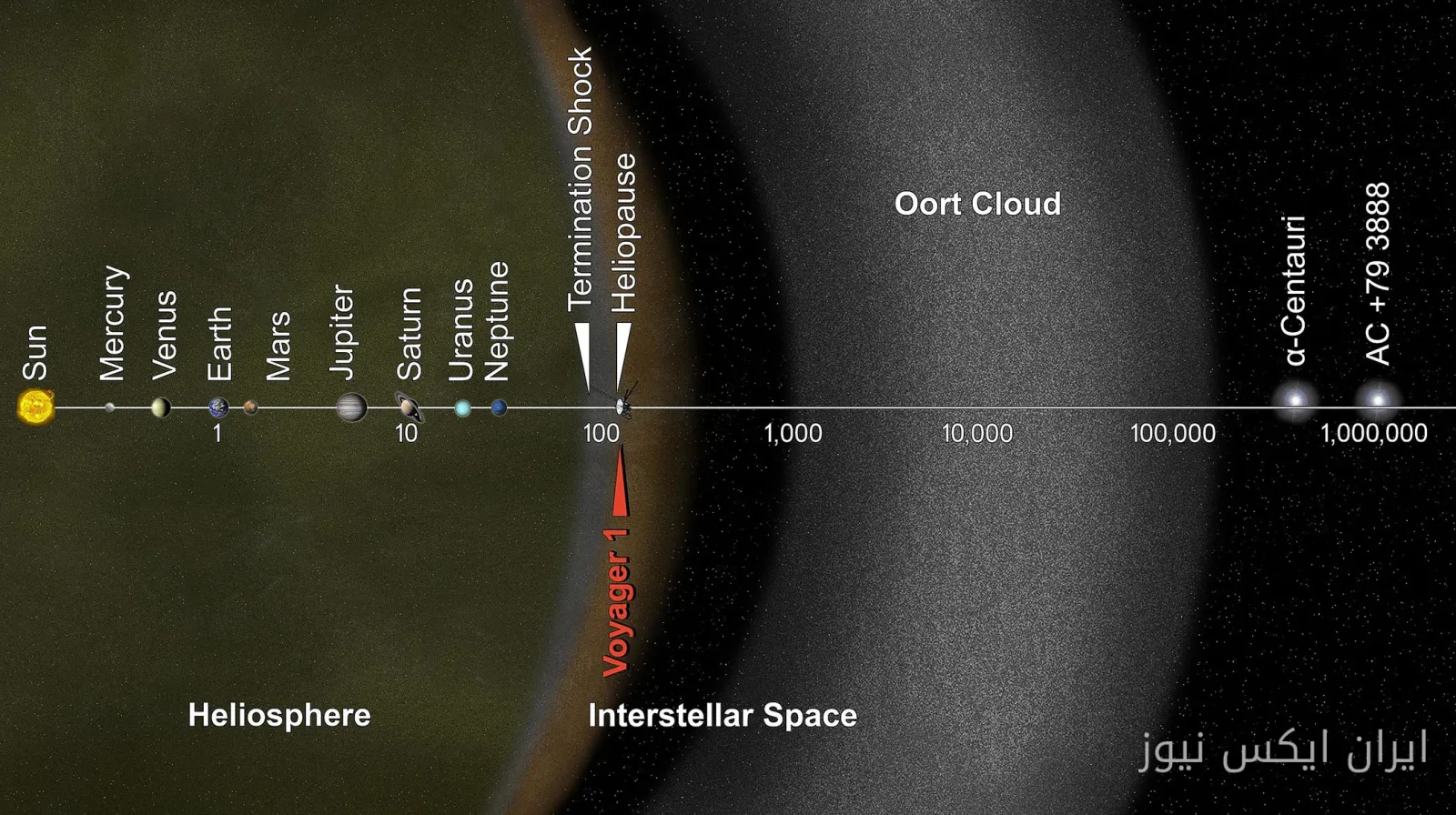
In today's world, traveling to the farthest points of galaxies and beyond the solar system is posed as one of the greatest scientific and technical challenges. With the continuous advancements in astronomy and space technology, the question arises in our minds: is it possible to travel beyond the solar system or not?
Technical Challenges of Space Travel
Traveling beyond the solar system requires numerous advanced technologies that are still in the early stages of development. One of the biggest challenges is travel time. At the current speed of spacecraft, reaching the nearest star to Earth, Proxima Centauri, could take tens of thousands of years. This long duration clearly highlights the limitations of our current technology.
In addition to time, the need to supply resources for astronauts during long journeys is acutely felt. Providing food, water, and oxygen for astronauts on a multi-year journey away from Earth is another significant challenge that must be addressed.
Innovative Technologies and Hopes
However, some scientists and researchers are seeking innovative ways to overcome these challenges. Technologies such as plasma engines and theories like "warp drives" could one day bring us closer to traveling in more distant spaces. These theories give us hope that perhaps one day we can travel at speeds close to light and reach other galaxies.
Moreover, space programs like "Mars missions" and "exploration programs of other planets' moons" demonstrate that humanity is seeking to expand its boundaries. These programs can be seen as initial steps to facilitate travel beyond the solar system.
Social and Cultural Implications
Traveling to other galaxies not only has scientific and technical impacts but will also have significant social and cultural implications. Imagine humans traveling to other planets in the future and communicating with extraterrestrial beings. This could change all our perceptions of life and existence.
Ultimately, traveling beyond the solar system remains shrouded in uncertainty, but human creativity and innovation in science and technology may one day turn this dream into reality. Are we approaching the time of realizing this dream? Only the future will determine the answer to this question.