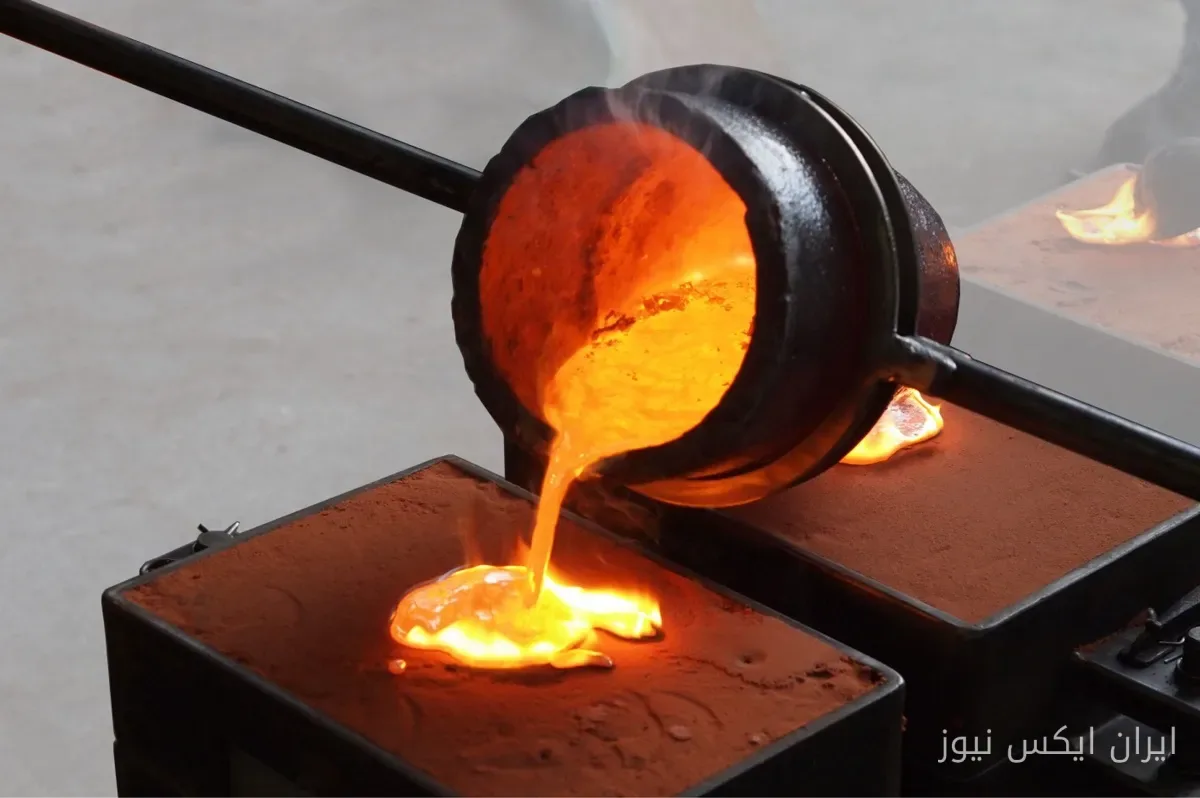
Metals are valuable materials, each with unique properties. One of the most important characteristics of metals is their melting point, which refers to the temperatures at which a metal turns into a liquid. This property can play a significant role in industrial and artistic applications.
Melting Point of Different Metals
The melting point of metals varies from the lowest temperature in aluminum, with a melting point of 660 degrees Celsius, to the very high melting point of tungsten, at 3410 degrees Celsius. These temperature differences are due to the atomic structure and the bonds between atoms in each metal.
Gold and silver, two precious metals, are recognized as popular materials in the jewelry and electronics industries due to their specific properties at different temperatures. Gold has a melting point of 1064 degrees Celsius and silver has a melting point of 963 degrees Celsius; both are well resistant to heat, but gold is a step ahead in this competition.
Thermal Resistance of Gold and Silver
Gold exhibits greater resistance to heat compared to silver due to its atomic structure and stronger bonds. This feature makes gold more attractive in industrial and electronic applications that require high heat.
Ultimately, the choice between gold and silver depends on the specific application and need. However, what is clear is that the melting point of metals not only affects their physical properties but is also recognized as a key factor in selecting suitable materials in various industries.