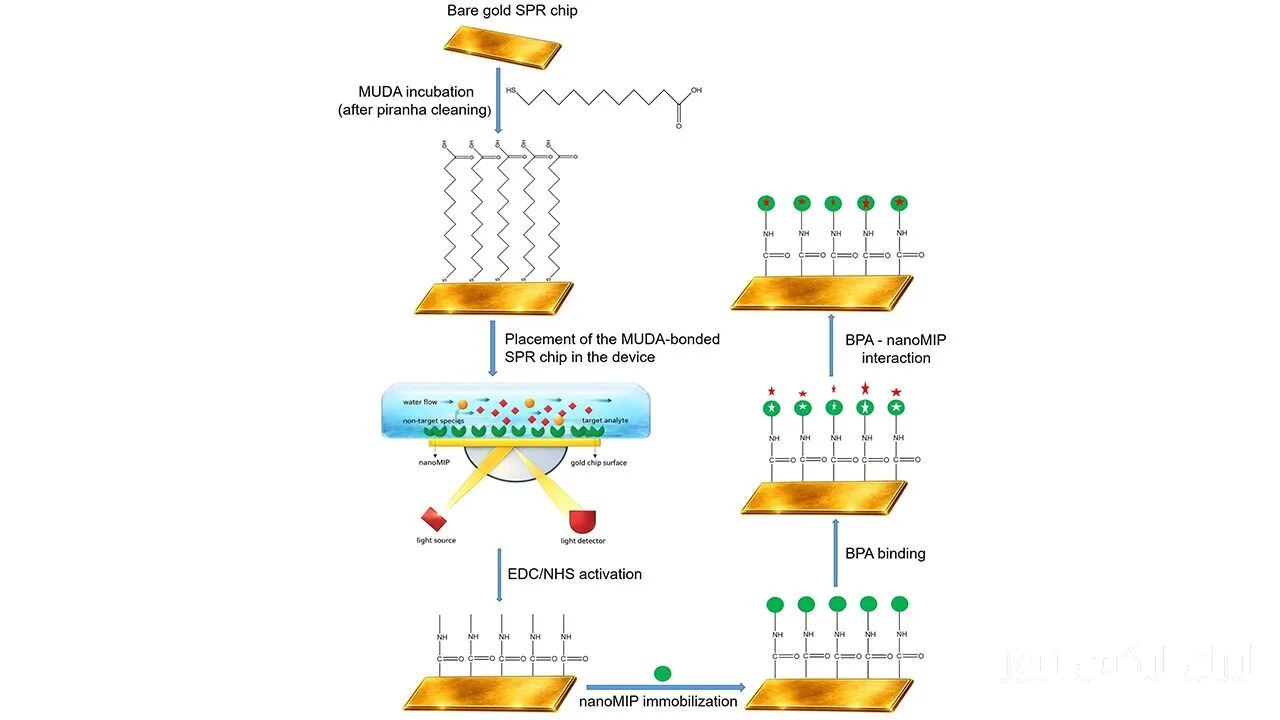
In today's world, one of the main concerns in the field of public health is the presence of harmful chemicals in drinking water. Researchers have developed a new sensor that can detect very low levels of Bisphenol A or BPA in water, and this innovation could serve as a warning for community health.
Why is BPA Dangerous?
BPA is a chemical that is widely used in various industries, especially in the production of plastics and resins. Studies show that this substance can negatively impact the human hormonal system and lead to issues such as hormonal disorders, fertility problems, and even cancer. Given these risks, identifying and tracking this substance in drinking water has become a necessity.
The new sensor is designed using nanotechnology and a molecular lock specifically tailored to detect BPA. This sensor is capable of identifying the presence of BPA even in very low amounts, and this capability can assist governments and health organizations in maintaining closer monitoring of drinking water quality.
A Bright Future for Water Health
This innovation can not only aid in the rapid detection of BPA but may also lead to the development of similar technologies for identifying other harmful substances in water. Researchers hope that with the expanded use of this sensor, society as a whole can be protected from the dangers of Bisphenol A and other pollutants, improving public health.
Undoubtedly, the introduction of this technology to the market could mark a turning point in environmental health and drinking water safety, increasing hopes for a healthier future.