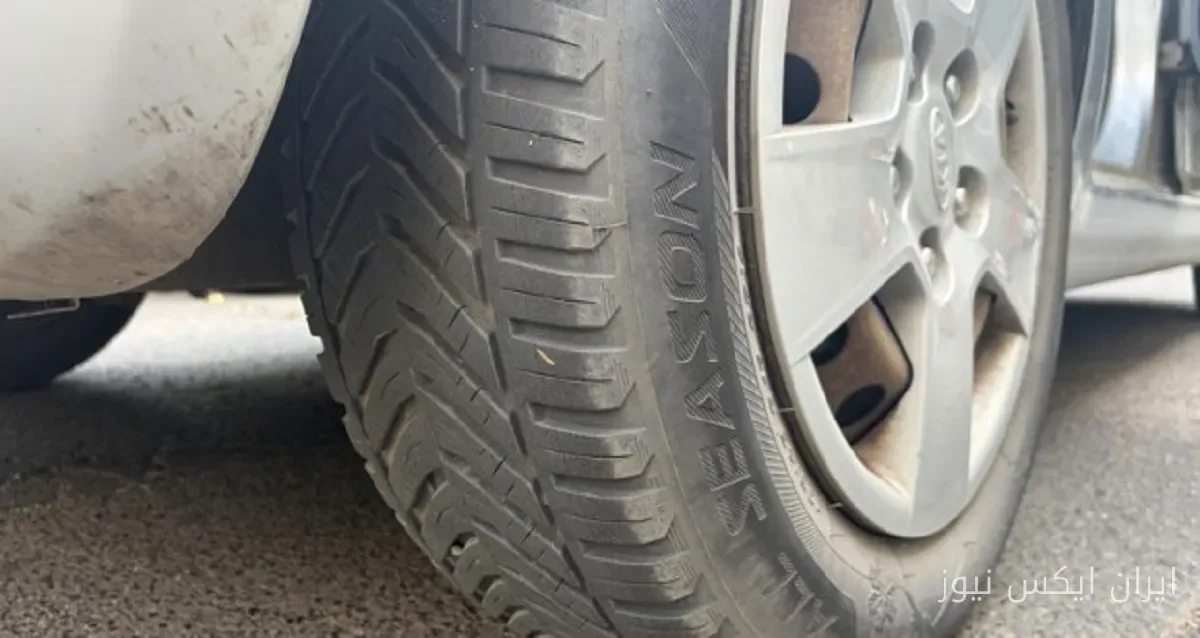
All-season tires are designed to provide acceptable performance across a wide range of weather conditions, from hot summers to mild winters. However, this multi-purpose feature often means a lack of specialization in any of these conditions.
Poor Performance in Warm Seasons
All-season tires are suitable for moderate weather conditions, but they can never compete with specialized summer tires in terms of grip and handling. These tires do not provide sufficient grip and precision for high-speed driving or sharp turns on hot days and dry roads, which can affect the driving experience.
Read more: Conquering Markets in 4 Countries with New Iranian Catalysts
Reduced Efficiency in Winter Conditions
The performance of all-season tires significantly declines in severe winter conditions such as deep snow, icy rain, and especially freezing temperatures. These tires, due to their tread design and rubber compounds, are unable to provide adequate traction on very slippery surfaces, jeopardizing driving safety in these conditions.
It is important to note that no all-season tire, even high-quality models, can achieve the level of traction and safety of a dedicated winter tire. Winter tires, with deeper treads and specialized rubber compounds, remain flexible at lower temperatures and offer better grip on snow and ice, which all-season tires lack.
Wear and Long-Term Costs
Continuous use of all-season tires throughout the year can lead to faster wear. A set of all-season tires that is used continuously may wear out in about three years and require replacement. In contrast, using two sets of tires (summer and winter) will prolong the lifespan of both sets.
Early wear of all-season tires means frequent replacements. With continuous use, you may need to purchase a new set after just two winters. This can increase long-term costs for drivers and may not be an economically optimal choice.
Lack of Specialization and Safety in Critical Conditions
The multi-purpose nature of all-season tires means that they do not achieve full specialization in any weather condition. This compromise on specialized performance can jeopardize the safety of the vehicle and its occupants in critical driving situations, as the tires do not provide the best possible performance for that specific condition.
Read more: General Radan: Smart Police High School, an Unprecedented Record in Construction History! · The Tragic Death of a Maragheh Shepherd Due to Lightning: A Lesson for Everyone