Throughout history, relations between countries have always been influenced by national interests and political ideologies. One of the most complex and controversial of these relations is the hostility between the Soviet Union and the United States, which led to the formation of the Cold War. This rivalry not only affected global politics but also impacted economic, social, and cultural spheres.
Ideological Roots
The ideology of communism, represented by the Soviet Union, was in contrast to the principles of American liberal democracy. This ideological conflict led to a Cold War in which both countries sought to expand their influence in various parts of the world. The two great powers quickly resorted to military and political hostilities, each seeking to garner support from other countries and nations.
Global Consequences
The hostility between the Soviet Union and the United States resulted in the formation of various political blocs around the world. Non-aligned countries and developing nations were divided into two categories: those that joined the Soviet Union and those that stood alongside the United States. This situation led to numerous wars and massacres in different parts of the world, with the Vietnam War and Afghanistan being notable examples.
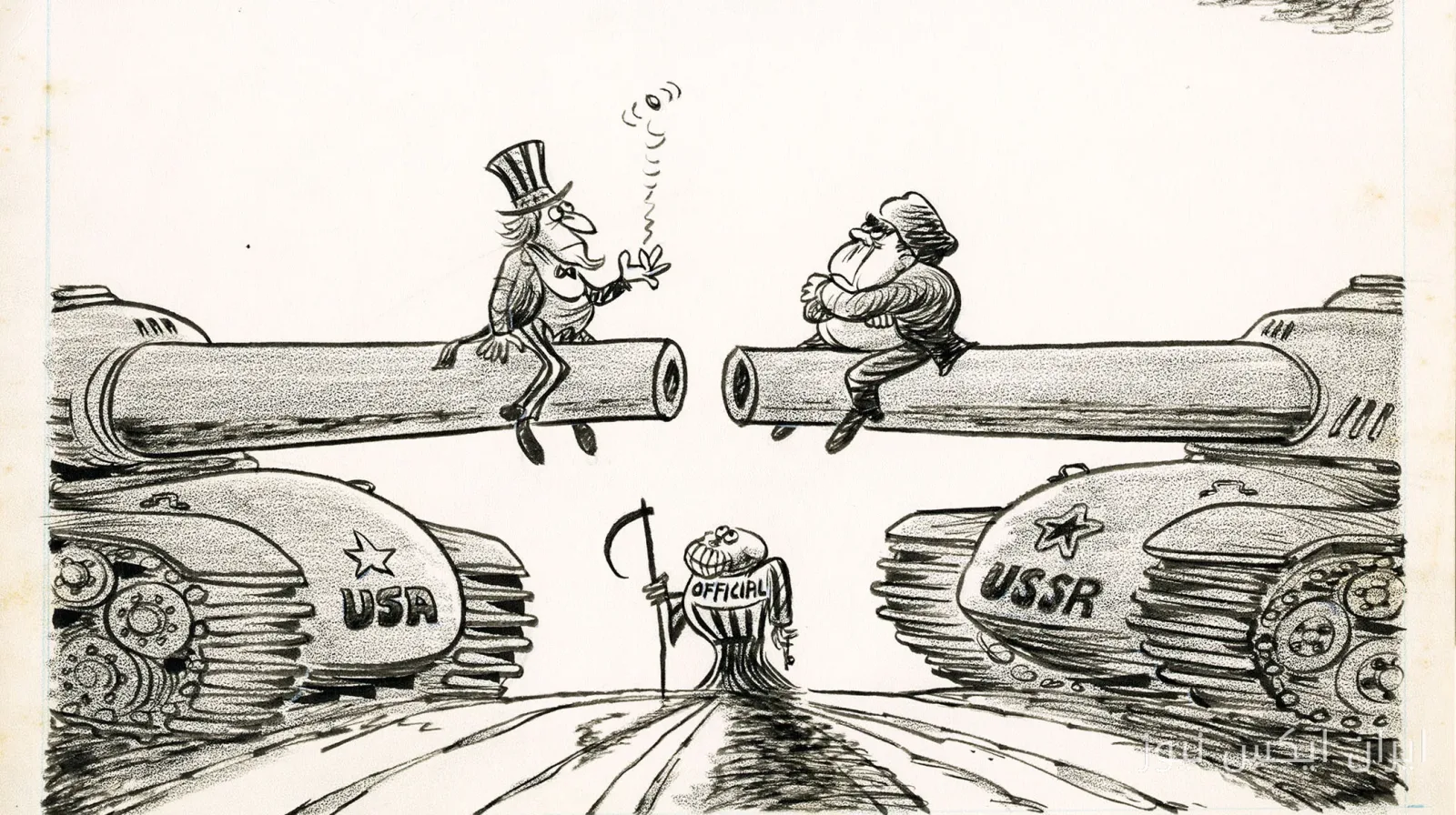
Moreover, this enmity led to an arms race and military competition between the two countries. Massive investments in the military industry and the production of nuclear weapons became a serious threat to global security. These competitions escalated to the point where the world was brought to the brink of nuclear war.
Ultimately, this hostility not only affected relations between the two countries but also had profound impacts on contemporary history and the future of the world. Even now, years after the end of the Cold War, the effects of these rivalries are still evident in international policies and relations between countries.