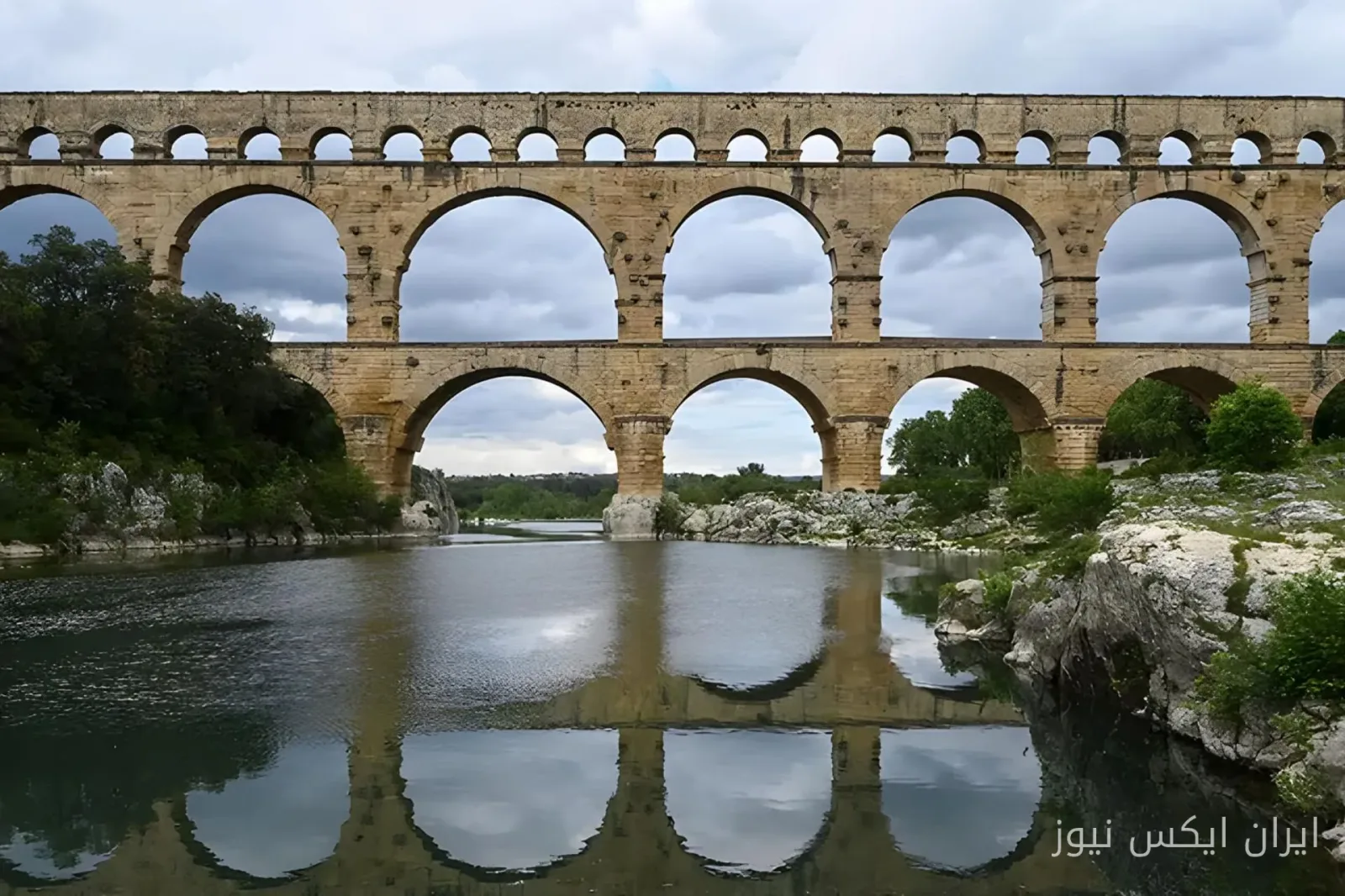
The ancient Romans, using precise engineering and selecting suitable routes, created a vast network of water supply that is still recognized in history as one of the engineering marvels. This system, known as the "aqueduct," showcases the technical and artistic capabilities of the Romans in ancient times.
Main Components of Aqueducts
Aqueducts, due to their precise design and durable materials, were able to transport water from distant sources to cities and areas in need. These complex networks included bridges, tunnels, and qanats, each playing an important role in water transportation. The Romans, using stone, concrete, and other resilient materials, created structures that were resistant to time and natural elements.
This water supply network not only helped provide drinking water but was also used for irrigating farms and cultivating plants. Roman engineers considered the slope of the land and other natural factors to choose the correct paths for water to flow easily.
Continuous Maintenance and Management
The most important aspect of the success of aqueducts was their continuous maintenance and proper management. The Romans had formed specialized groups to preserve and repair these complex systems to ensure their proper functioning. This attention to detail allowed Roman water supply to continue for centuries and be recognized as a prominent example of engineering in history.
Today, archaeological investigations and scientific studies show that the water supply techniques of ancient Romans were not only used at that time but also in many subsequent societies. This engineering legacy continues to inspire modern architects and engineers and reminds us how we can overcome challenges with a deep understanding of nature and the application of knowledge.