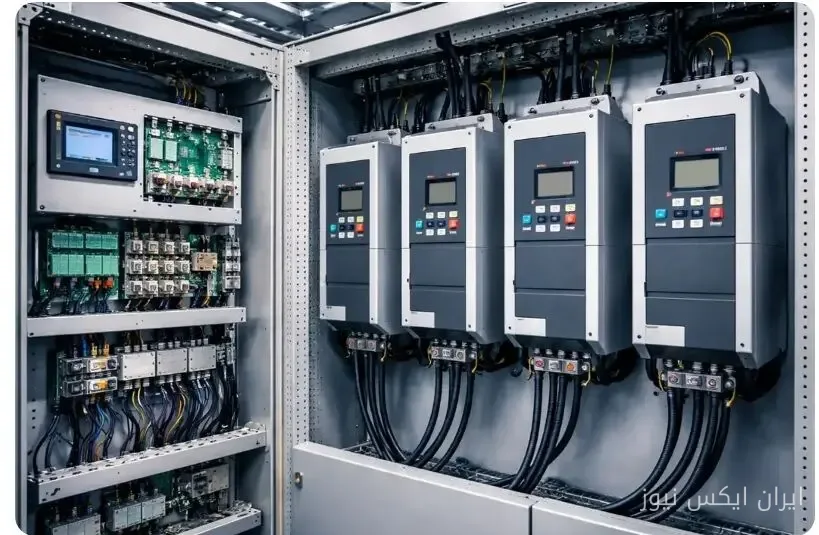
In the industrial world, inverters play a vital role in energy control and management, but their being off has caused concern among many in this field. This situation may not simply be due to device failure, and there may be other underlying reasons.
Causes of Inverter Shutdowns
One of the main reasons for inverters not turning on is a fault in the power supply path, fuses, connections, DC link, or control circuits. In other words, the problem may not lie with the inverter itself but rather with its infrastructure. To determine the exact cause, measuring the input voltage and DC link is essential.
If the input power is healthy but the display or control circuit does not activate, a thorough examination of the power board and control board can be enlightening. Here, step-by-step troubleshooting can prevent unnecessary costs and easily identify the fault.
The Importance of Specialized Troubleshooting
Before considering replacing the inverter, it is better to engage in specialized troubleshooting. In many cases, with a thorough inspection and adequate knowledge of the system, the problem can be resolved without incurring heavy costs for purchasing a new device.
In fact, a precise understanding of industrial systems and equipment can lead to improved performance and reduced costs. Therefore, instead of worrying about the inverters being off, let’s focus on troubleshooting and conducting a more detailed analysis to help improve our industrial conditions.