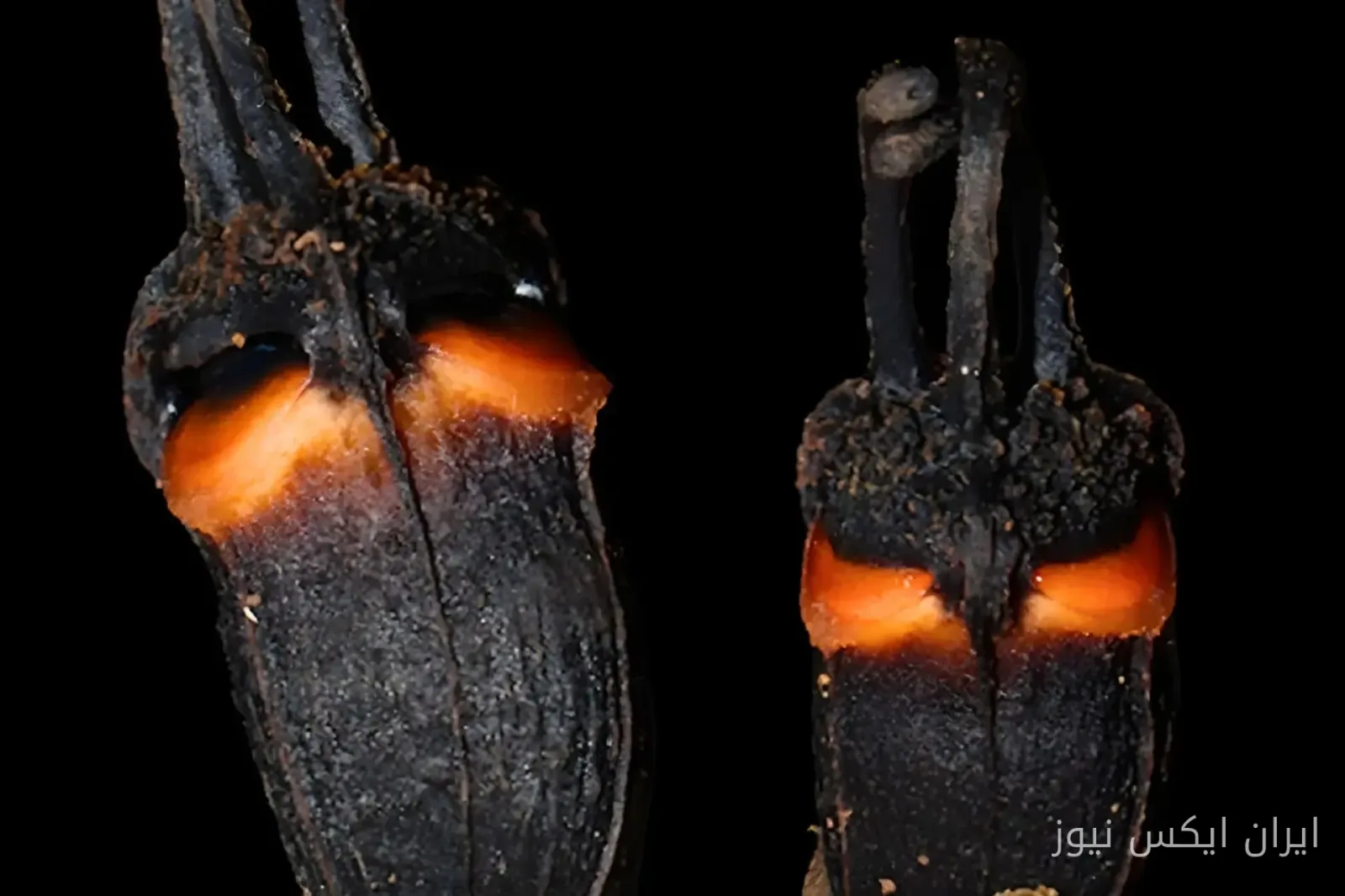
The Tismia dimon plant was discovered in Tong Fa Pum National Park located in the western forests of Thailand. With its strange and unusual appearance, it has attracted the attention of scientists and is known as the 'Devil's Flower' due to its independence from sunlight.
Unique Characteristics of the Tismia dimon Plant
The appearance of Tismia dimon resembles a plant that has come out of a horror story; a small flower with an almost black color and orange parts resembling eyes. Unlike most plants that require sunlight to produce energy, this plant lacks chlorophyll and cannot photosynthesize. Thus, this plant uses an unusual method to obtain its energy: cooperation with underground fungi.
Read more: Governor of Gilan-e Gharb: Waste management is our top priority!
The roots of this plant connect to a network of soil fungi and receive the necessary nutrients from them. The Devil's Flower spends most of its life under the dry leaves of the forest and only emerges from the ground during flowering and seed production.
Growth Location and Future Threats to the Plant
The discovery of the Devil's Flower is interesting to researchers for several reasons. Tismia dimon has been found in mountainous conditions at an altitude of about 930 to 970 meters above sea level, while other species of the Tismia genus are usually seen in rainforests and moist environments at lower elevations. This information suggests that this group of plants may have the ability to thrive in more diverse environments.
Despite the scientific importance of this discovery, the future of the Tismia dimon plant is not very certain. So far, only one population has been found, consisting of fewer than 50 plants, living in an area much smaller than 0.05 square kilometers. Although this plant is located in a protected national park, tourist traffic can be dangerous for it. Damage to the forest floor or the underground fungal network may threaten the survival of this plant.
Researchers, considering the very small number of known specimens and the limited habitat of this plant, have temporarily assessed it as 'critically endangered.' This classification does not yet mean the official listing of the species in the IUCN Red List, but is merely a preliminary assessment to indicate its level of vulnerability.
The discovery of the Devil's Flower reminds us that even in well-known and protected areas, there may be species that are still unknown to science; plants that may not be hidden in remote heights but right beneath the leaves on the ground.
This research has been published in the journal PhytoKeys.
Read more: Giant whale carcass on the shores of Bandar Lengeh: A warning for marine life · Giant whale carcass on the shores of Bandar Lengeh; unanswered questions await