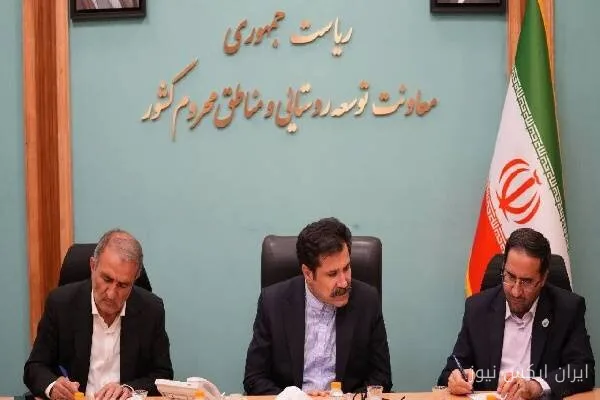
Yadollah Rahmani emphasized the necessity of implementing the social forestry plan based on the seventh development program during a meeting with the Deputy for Rural Development and Underprivileged Areas of the President on Tuesday morning, calling for special attention from national officials to this plan.
Community Participation in Forest Protection
Rahmani stated that with the implementation of social forestry, people will participate in the protection, restoration, development, and proper utilization of forests and pastures, and this participation can pave the way for creating sustainable income for local communities.
Development of Value Chains and Processing Industries
The governor of Kohgiluyeh and Boyer-Ahmad considered the creation of a value chain and the development of processing and complementary industries as complementary to social forestry, adding that alongside generating income for people from social forestry-related projects, the development of the value chain and processing industries can contribute to job creation and economic growth in the province.
The director-general of Natural Resources and Watershed Management of Kohgiluyeh and Boyer-Ahmad also announced plans to implement a sustainable management project for the Zagros forests centered on social forestry in 250,000 hectares of the province's areas. Seyed Jamal Mousavian stated that the main goal of this plan is to improve the livelihoods and employment of local communities alongside the protection of nature.
He added that the legal basis for implementing this plan is Article 3 of the Law on the Protection and Utilization of Forests and Rangelands and Articles 36 and 37 of the Seventh Development Plan Law. This plan includes the cultivation and development of medicinal, industrial, and economic plants, participatory economic afforestation, and wood farming.
Division of Responsibilities Between Government and Beneficiaries
Mousavian also discussed the division of responsibilities between the government and beneficiaries, stating that the government is responsible for providing infrastructure, offering expert and technical services, monitoring, and oversight as part of social responsibilities and poverty alleviation, while beneficiaries will be responsible for preparing the area, implementing the plan, irrigation and care, protection, and utilization.
He considered community participation as one of the main pillars of social forestry and noted that with government support and proper implementation of the plan, at least 80,000 jobs will be created in the province.
Reza Aflatouni, the Deputy Minister of Agricultural Jihad and Head of the National Natural Resources and Watershed Management Organization, also emphasized the necessity of changing the perspective on natural resources and announced two important national actions for the protection and restoration of the Zagros forests.
Hossein Zadeh, the Deputy for Underprivileged Areas and Rural Development of the President, also referred to the natural capacities of Kohgiluyeh and Boyer-Ahmad, considering forests as an opportunity to create sustainable income for villagers and expressed his readiness to support the implementation of this plan.