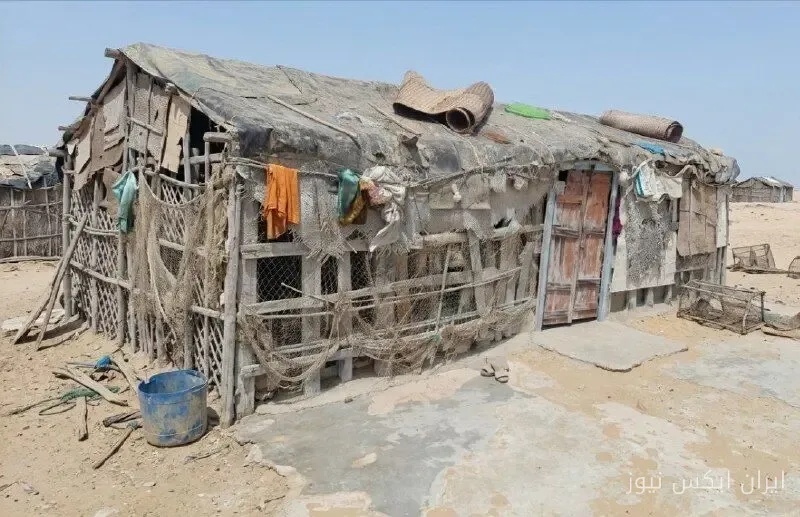
The economic crisis in the Chanf region of southern Sistan and Baluchestan has severely pressured the lives of its residents. Half-dead palm trees and cracked lands are signs of the link between the climate crisis and the collapse of livelihoods in this area. Once, date palm groves and citrus orchards, supported by abundant qanats, drove the local economy, but successive droughts have dried up the qanats and destroyed the orchards.
Livelihood and Employment Situation in Chanf
With the destruction of agriculture, the workforce that had rooted itself in this land for generations has joined the ranks of unsupported and unemployed workers. Today, nearly 90 percent of the local workforce has no sustainable income and relies on government subsidies and food coupons to meet basic living needs. Residents' accounts indicate that informal employment and workers who are not registered anywhere have exacerbated the labor market crisis in this area.
Read more: Four foreign nationals arrested in clashes in Sharafabad, Kerman
Risky Jobs and Social Harms
Due to the lack of industries and production workshops, the youth of Chanf find themselves faced with three unavoidable options: turning to risky and informal jobs like fuel smuggling, falling into the trap of social harms, or migrating to provincial centers. Many locals say that when they go to other cities for work, they must prove they are not Afghan workers, and in most cases, Afghan workers are preferred over Iranian labor.
According to reports from the Ministry of Cooperatives, Labor, and Social Welfare, Sistan and Baluchestan province has the highest rate of informal employment in the country, with over 64 to 70 percent of its workforce in this situation. In mountainous villages and southern counties, basic concepts like work contracts, social security insurance, and leave are rarely present. This situation means that in the event of workplace accidents, there is no safety net from the Social Security Organization, and the descent below the poverty line accelerates rapidly.
The official unemployment rate in Sistan and Baluchestan province is reported to be 10.5 percent in 1404, but existing realities indicate widespread unemployment and a lack of active economic enterprises in various areas, especially Chanf. Statistics show that the poverty rate in this province has reached 62 percent, and in some southern counties, it exceeds 70 percent.
Infrastructure deprivation and high living costs have severely impacted the social and economic resilience of the people in this region. The water and energy crisis has left residents without access to piped water and urban gas networks. In the winter season, heating many homes relies on oil lamps and burning firewood.
In this context, the lack of a banking network and financial cycle in the Ahouran region and the city of Chanf has created serious problems for obtaining employment and local investment facilities. Additionally, there is only one semi-active clinic in this area, which is sometimes without a doctor for weeks.
The forced migration of young people to other provinces has created a widespread wave of poverty and unemployment. Baluch workers face additional legal and social challenges at their work destinations. The lack of identity documents and unfair labeling forces them into inhumane working conditions without insurance coverage.
Read more: Head of the Prisons Organization: Martyr Mojtaba Omidi is a role model for generations · Statement from the representative of the Wali Faqih in Sistan and Baluchestan: Terrorists have targeted the security of the country