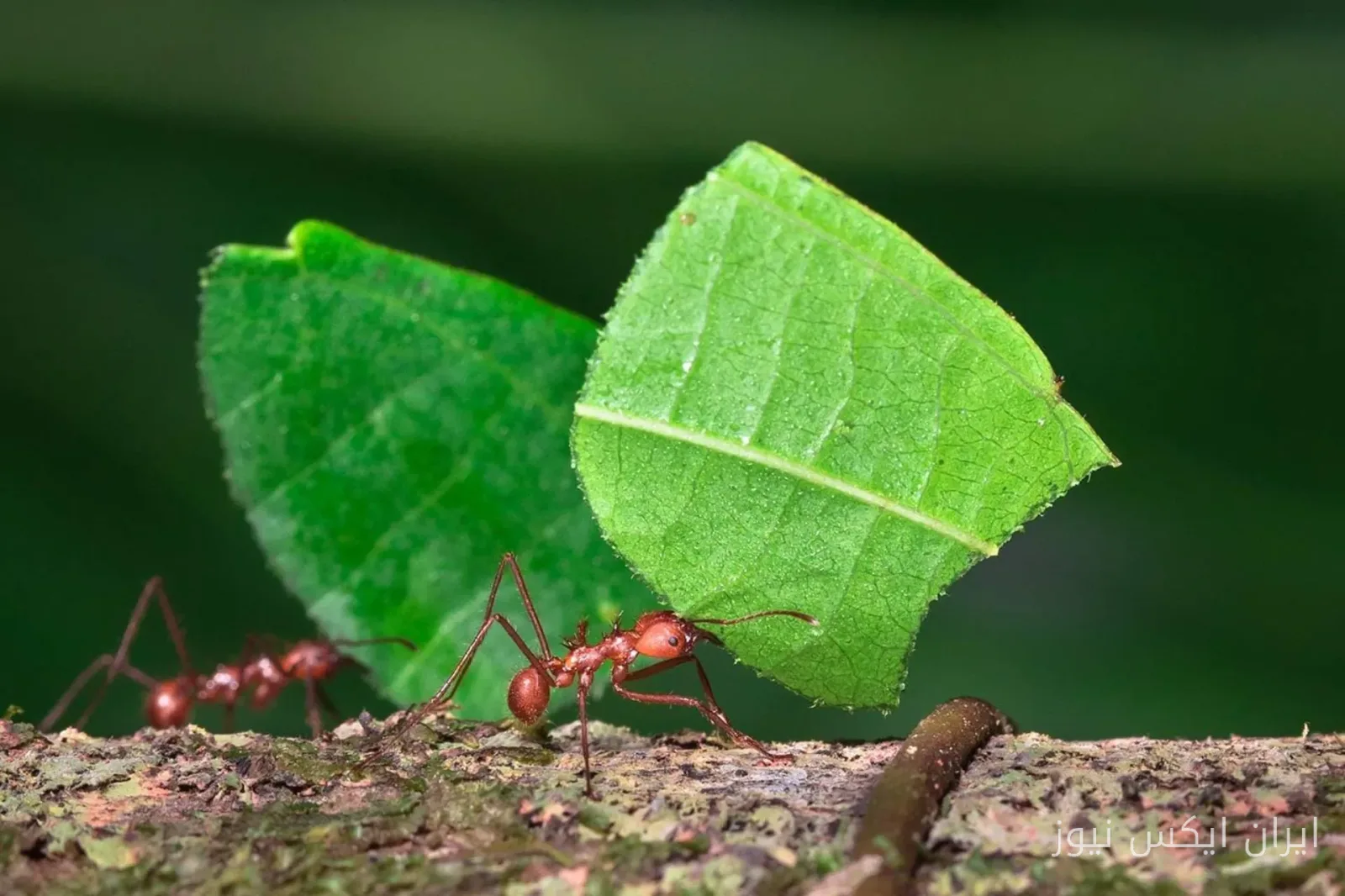
Insects have a different situation. The brain of some of them is as small as a grain, yet this simple nervous system can handle complex decisions. The problem-solving methods in some insects are so efficient that researchers have drawn inspiration from them to design decision-making and optimization algorithms for real-world issues, from transportation to network management.
Ants and Finding the Best Path
Choosing the best way to accomplish a task is not always simple, especially when we have many options. Psychologists refer to this situation as "choice overload"; when the abundance of options makes decision-making more difficult instead of helping. Ants also face a similar problem when selecting a suitable place to find food, but many species have evolved a simple and highly efficient solution to it.
Initially, a number of ants leave the nest and randomly search for food along different paths. As they move and return, they leave a weak trail of chemicals known as "pheromones" on the ground. Other ants can follow this trail, but pheromones gradually evaporate, and usually, paths with a stronger scent attract more attention. An ant that reaches food via a shorter and more efficient route returns to the nest sooner.
Honeybee Democracy
Honeybees use a method that closely resembles the optimal search of ants when choosing a new location for building a hive. A few scout bees leave the hive and search for suitable options in a scattered manner. The difference is that instead of leaving a pheromone trail, bees return to the hive and directly communicate their assessment to others.
The communication tool of honeybees is the waggle dance. A scout bee conveys information about the quality of the proposed site through regular body movements; from the level of safety and distance to the size of the space and its position. The more suitable the site, the longer and more energetic the dance becomes. Honeybees: good collective decisions are formed when options are evaluated and real support for a choice reaches a threshold.
Grasshoppers and the Power of Staying Neutral
Changing people's opinions is not an easy task, especially when a group is divided between two completely opposing options. In such situations, the discussion quickly turns into two camps of "this or that," and each side insists on its position more than before. However, a recent study on grasshoppers shows that there may be a simple way to break this deadlock: not making a decision for a while.
Christian Keith Yates, a professor of mathematical biology at the University of Bath in the UK, placed a group of immature grasshoppers in a circular area in an experiment. Yates noticed that the group of grasshoppers sometimes suddenly changed their direction after a brief pause. The key point was this pause: at the moment when more grasshoppers stopped moving and effectively took a neutral position, the group could more easily distance itself from the previous decision and move in another direction.
This behavior can carry important lessons for us humans. Especially in situations where we are confused among different options, sometimes pausing and reconsidering can help us break out of a deadlock.
Read more: Morning newspapers on Tuesday, September 23, 1405 covered political and social events · Colpopetra; an insect with red eyes and amazing jumps in Ecuador