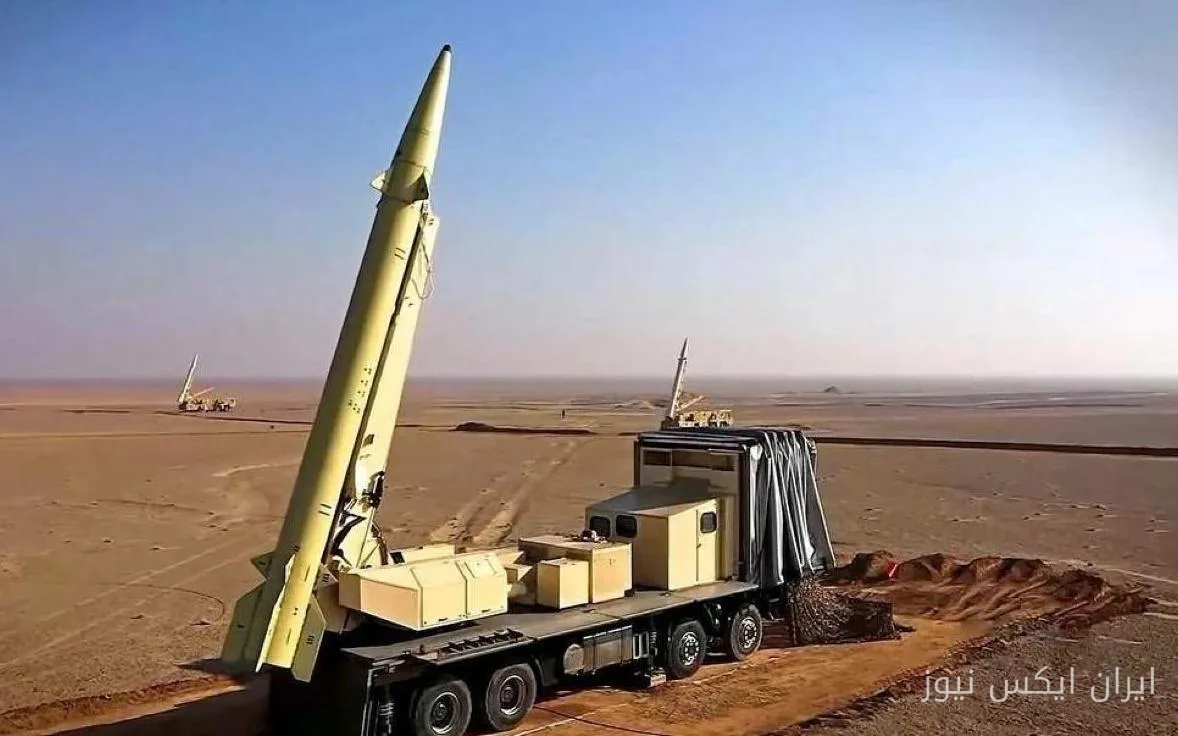
Iran's anti-ship missiles, as one of the most important tools of modern naval warfare, enhance the ability to threaten large vessels. This transformation is due to advancements in technology and diversity in missile systems.
Development of Missile Technology in Iran
In recent decades, Iran has paid special attention to the development of anti-ship missiles and has introduced families such as Noor, Qader, Nasr, Zafar, and Persian Gulf as part of this chain. The Noor missile, which is considered one of the most well-known anti-ship missiles in Iran, is inspired by Chinese designs and flies at low altitude with its unique features. This missile has the capability to identify targets in the final phase of flight.
Read more: 15,720 first-grade students have registered in Markazi province
Challenges of Targeting Naval Vessels
Targeting a moving ship is significantly more complex than hitting a stationary building. This challenge arises from the movement of ships, their course changes, and radar reflections at sea. Therefore, anti-ship missiles require radar and optical seekers to identify targets under various conditions.
Iran has also developed ballistic anti-ship missiles such as Persian Gulf and Zulfiqar Basir, which demonstrate the technological capability of the Fateh family for anti-ship missions. These missiles are designed as a variant of Fateh-110 with an electro-optical seeker.
Defensive Network and Saturation Attack
The importance of anti-ship missiles lies not only in their design but also in the network that identifies the target. Coastal radars, aircraft, drones, and other sensors provide the necessary information for battlefield identification, and anti-ship missiles are part of this complex network.
Anti-ship missiles cannot easily overcome the modern defensive systems of ships. Modern vessels utilize electronic warfare systems, decoys, and point defense, which pose challenges for attacking missiles. In this regard, the concept of saturation attack arises; by simultaneously launching a large number of missiles, pressure on the defensive system increases.
Strategic Implications
In recent years, drones have also been introduced as a key tool in identifying and directing anti-ship missiles. These technologies have narrowed the gap between identification and engagement, significantly enhancing Iran's capabilities in naval warfare. Anti-ship missiles are not only designed to sink ships but also to damage their vital systems, potentially taking them out of operational cycles.
Iran has sought to diversify its missiles, pursuing multiple technological paths simultaneously from subsonic cruise missiles to ballistic ones. This diversity helps create different layers of threat and has turned Iran's naval power into a serious challenge for large vessels.
Ultimately, the changing concept of naval power in the region is clearly evident; where the size of a vessel is no longer the sole measure of power, and the ability to identify, target, and engage from long distances has gained greater importance.
Read more: Mohsen Rezaei: No negotiations will take place until Iran's conditions are met · China's Foreign Minister commented on the Iran-U.S. war