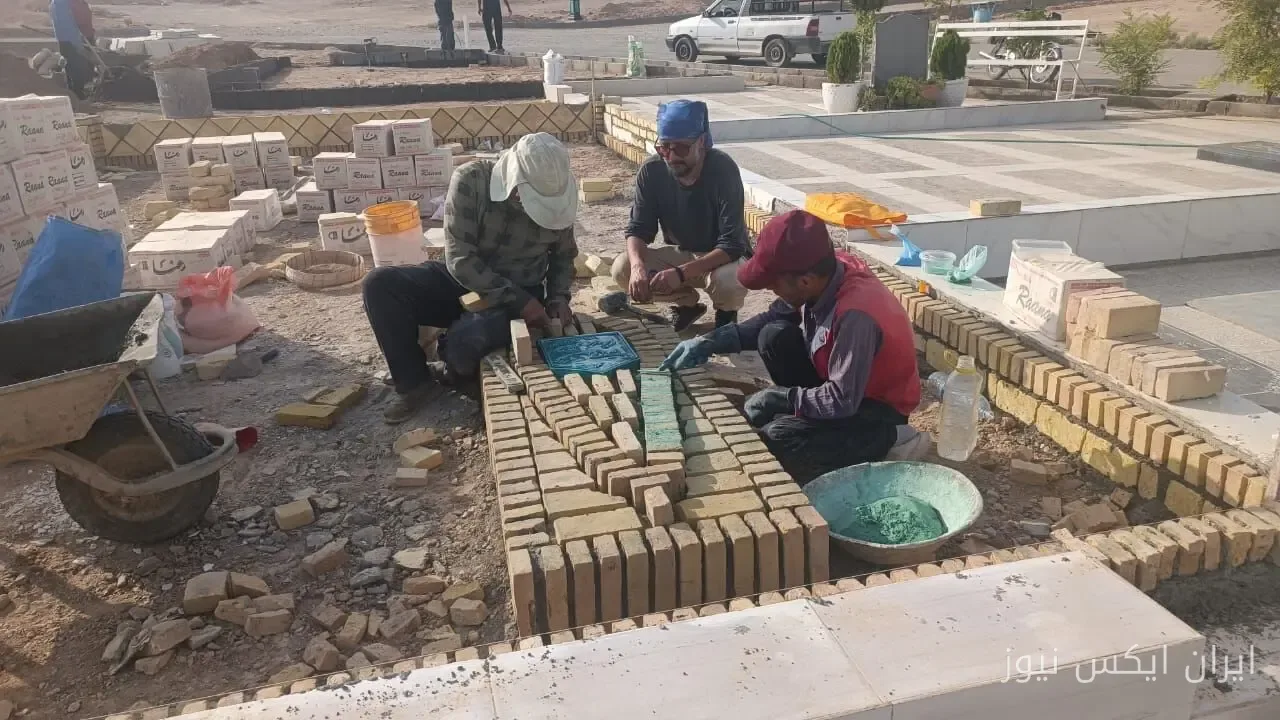
The traditional bricklaying art of graves in the historical city of Abarkooh, Yazd has returned after several decades of fading. This revival is recognized as an effort to preserve the architectural identity of this city and to revive local skills. The designer and ideator of this project has stated that their goal is to safeguard intangible cultural heritage and create a link between art and environmental considerations.
Background of Traditional Bricklaying in Iran
Bricklaying, as one of the traditional arts of Iran, has had extensive applications throughout history in the construction of religious, historical, and cultural buildings. This art has been particularly used in cemeteries and sacred places with specific and diverse patterns. However, due to social and cultural changes in recent decades, this art has gradually been forgotten.
Read more: Bishe Waterfall: An Attraction Hidden in the Heart of the Mountains and Forests of Lorestan
Abarkooh's Experience in Reviving the Art
In Abarkooh, a group of artists and architects quickly took action to revive this art. They designed and executed graves using traditional bricks and old techniques. This design not only helps preserve the art of bricklaying but also strengthens the cultural and architectural identity of the region. The designers of this project believe that the revival of this art can serve as a suitable model for other cities in Iran.
This project also seeks to raise awareness in the community about the importance of cultural heritage and the need to protect it. By holding workshops and exhibitions, various groups, especially young people, are attracted to this traditional art and acquire the necessary skills. Through this, not only is the art of bricklaying revived, but a new generation of artists also enters this field.
Social and Environmental Implications
The revival of traditional bricklaying art in Abarkooh has positive implications for the community and the environment. These activities increase public awareness about the need to protect cultural heritage and also foster greater social interaction among residents. At the same time, by using local materials and indigenous methods, this project contributes to environmental preservation.
Ultimately, the revival of this art is not only a cultural action but also a movement towards sustainable development and strengthening local identity. With the continuation of these efforts, it is hoped that the traditional bricklaying art of graves will be revived not only in Abarkooh but also in other regions of Iran and passed on to future generations.
Read more: Night Gathering of People in Azadshahr with Solidarity and Cohesion · Bank Melli Iran and the Ministry of Cultural Heritage: 30 Efforts to Accelerate Tourism