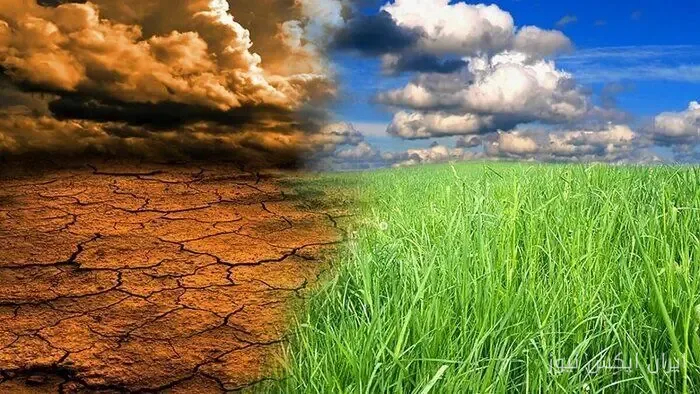
The ecological ceiling of urban development in Iran was discussed at the third meeting of 'City and Water'. Abbas Akhoundi, former Minister of Roads and Urban Development, emphasized that the issue of water has not yet been able to determine the limits of construction and population density in cities. He stated that there are numerical limits for building height and density in urban plans, but there is no clear number for one of the main limitations of the city, which is water resources.
Water and Construction Challenges in Tehran
Akhoundi pointed out that water is transferred from Taleqan, Karaj, and Lar to Tehran, stating, 'Tehran is still facing the water issue.' He questioned whether there is a point at which urban development can be said to be 'enough.' He emphasized that there are regulations for many issues in comprehensive plans, but the limitation of natural resources has not yet gained the same power that density or land use regulations have.
Read more: Hamadan on the brink of heat: Temperature rises from Tuesday!
The Impact of Climate Change and Land Subsidence
Saeed Sadatnia, an urban planner, also referred to the experience of Isfahan, stating, 'Isfahan has fundamentally been shaped by water.' He emphasized that in a water-scarce city, it is not enough to simply increase the area of green space; attention must also be paid to the type of plants and their water needs. Finally, Ramin Saadmocheshi referred to the traditional development model, saying that in this perspective, land, water, and environmental resources are not properly considered.
Read more: Controversial instruction by Pezeshkian for remote work: Car-free day is on the way! · Kuyik swallowed in Nishapur; the ground subsided beneath the citizens!