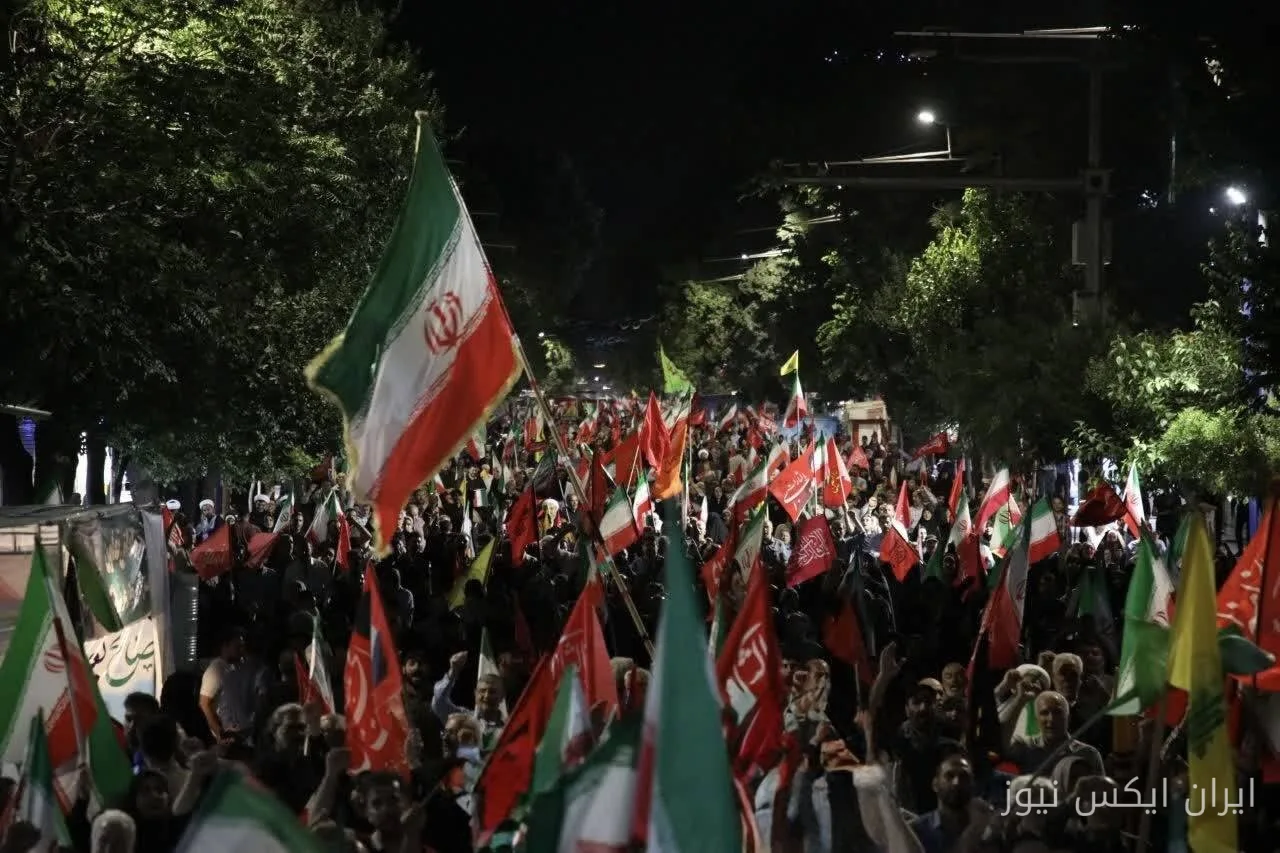
The Velayat-e Faqih Square in Urmia has become not just a point on the map for 200 nights, but part of the narrative of the nights of this city and a symbol of "Nights of Resistance and National Power." These gatherings, which start every night around 10 PM, depict the unity and cohesion of the people of Urmia.
Nightly Programs and Enthusiastic Participation of the People
During these 200 nights, people arrive at the Velayat-e Faqih Square from various paths and stand together. Each night begins with the sound of the Quran being recited and the national anthem, followed by diverse programs including speeches, poetry, epic recitations, and anti-imperialist slogans. Additionally, the dance of the Islamic Republic flag and programs related to the Resistance Front and the blood avenging of the martyr leader have been other highlights of these gatherings.
Read more: Funeral of Martyr Muslim Fazeli in Saravan
The presence of families, youth, and people who join this gathering after a day of work reflects the significance of this event for the people. The programs change according to the mood of the night and the occasions, bringing a new experience for participants each night.
Participants' Opinions: A Sense of Duty and Solidarity
On the 200th night, Asad Hajizadeh, a 61-year-old citizen of Urmia, told the reporter: "My presence at this gathering has become a duty. As a martyrdom-seeker for my homeland, this is the least I can do to defend my country." He also emphasized the importance of people's unity against external threats.
Nazanin Zahra, a 12-year-old girl who is attending the gathering with her family, said: "Being at this gathering gives me a sense of pride and happiness, and I want to tell the armed forces of my country that we are with them."
Somayeh Javadi, one of the women present at this gathering, stated that she comes to this square every night, saying: "Supporting the land and homeland is the duty of every proud and powerful Iranian. Our presence is a form of appreciation for the efforts of the armed forces for the security of the country."
As the program ends and the prayer for the reappearance is recited, the crowd gradually leaves the square, and the atmosphere returns to normal; however, for the organizers, this program continues after 200 nights, with an event held in the Velayat-e Faqih Square every night according to the occasion and current conditions.
Read more: Khuzestan and Hoor al-Azim: A Story of Hope and Challenges · Hojjat al-Islam wal-Muslimeen Ta'ib: The Necessity of Utilizing Art in Narrating the Resistance of the Iranian Nation