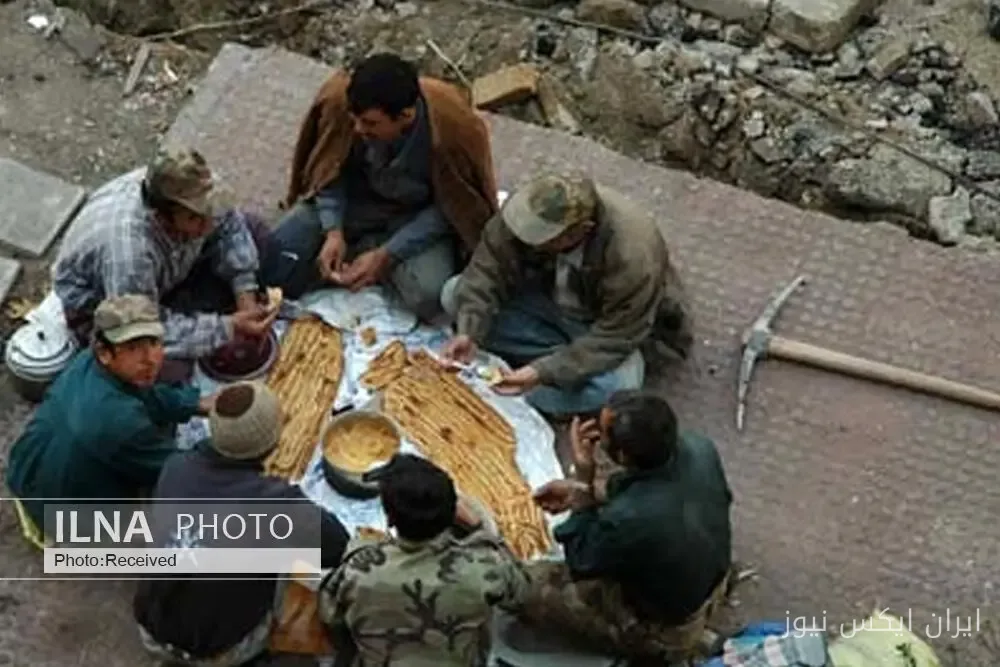
The minimum wage for workers should be able to cover the basic costs of a normal life; this legal requirement has never been seriously pursued by the governing authorities. Wage suppression and the exploitation of labor have continued covertly for decades, and the gap between wages and living costs has deepened to unprecedented levels.
Food Costs and Wage Lag
Food costs in August of this year were at least 15 million tomans more than the worker's wage plus benefits. According to published reports, in August, the food costs for an average family of 3.3 people reached 40 million tomans, while the wage for a married worker with all benefits is 24 million and 900 thousand tomans. This means minimum-wage workers must spend 15 million tomans more than their salary on food costs.
Read more: Reconstruction of Damaged Bridges in Hormozgan Nearing Completion
Ruthless Increase in Costs
According to reports, the minimum living costs for workers in August reached about 92 million tomans, of which only 25 million tomans is allocated to workers' wages. This wage covers only 27 percent of living costs, and workers face serious problems for 22 days of the month. This situation has caused the middle class to severely shrink, and many workers even struggle to purchase basic goods.
Alongside this, the relentless price increases of other goods and services, from medicine to transportation, have severely pressured workers' living conditions. For example, the prices of Iranian medicines have increased by an average of 150 percent, and foreign medicines have risen by up to 500 percent. Meanwhile, the increase in gasoline prices has exacerbated the difficult transportation conditions.
In this situation, whispers from the Supreme Labor Council and workers' representatives about the possibility of wage adjustments are heard, but these voices seem to be more about creating false hope among workers. The government and employers refuse to increase wages under the pretext of budget shortages and critical production conditions.
On the other hand, workers lack independent and powerful organizations to demand their rights, and as a result, there is little hope for a fair wage adjustment. In this context, the only way to solve the livelihood crisis is through fundamental changes in economic policies and attention to the real situation of workers.
Read more: Allocation of 4,000 Hectares of Tropical Lands in Ilam for Agricultural and Industrial Projects · Davood Keshvari: Workers Want Their Rights, Not Charity