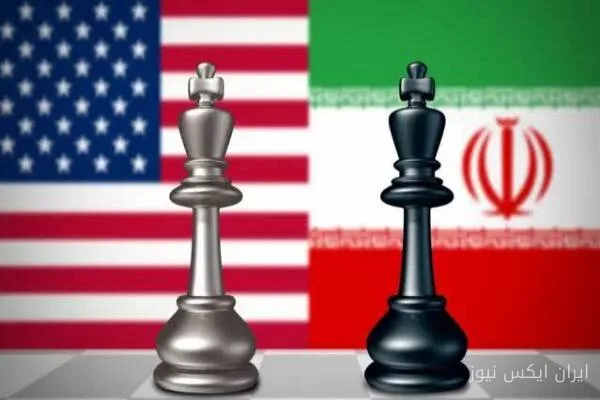
As part of a new economic pressure campaign against Iran, the United States is now trying to complete the encirclement of Tehran through means other than the Persian Gulf and the western and eastern borders of the country: limiting Iran's land connections with Central Asian countries.
Washington's Threats to Cut Relations
The Trump administration has asked regional countries to reduce or halt their trade with Iran, identify companies linked to Tehran, and limit or stop the activities of Iranian banks' branches. Washington has also threatened that countries and institutions that do not comply with these requests will face secondary sanctions and restrictions on access to the dollar-based financial system.
Read more: Gathering of Mosque Residents in Qazvin on the 201st Day of Resistance
On the surface, this policy could be seen as part of the “maximum pressure” strategy against the Islamic Republic of Iran; however, in practice, it faces a fundamental problem. Unlike many countries that the U.S. has previously tried to isolate, Iran is not merely a single economy or market.
Geopolitical Challenges
Iran's geographical position is such that removing it from regional transportation, energy, and trade networks incurs costs for many of its neighbors. For this reason, what Washington wants to implement as the “land blockade of Iran” may, in practice, turn into an effort to impose costs on Central Asian countries rather than an effective action to isolate Tehran.
The volume of direct trade between Central Asian countries and Iran, although not large compared to their trade with China, Russia, or Europe, cannot measure Iran's significance for these countries by the volume of bilateral trade. Iran's real value lies in its role as a transit route and access to open waters.
The five Central Asian republics all face a common geographical problem: being landlocked. They must pass through the territory of other countries to access global markets. Iran is one of the few natural and practical routes for creating a southern corridor that allows these countries access to the markets of India, the Middle East, and beyond.
Therefore, U.S. pressure to cut relations with Iran does not merely mean limiting exports and imports; if fully implemented, it means eliminating one of the geopolitical options for Central Asian countries to escape their geographical deadlock.
Read more: Patriotism from the Perspective of Hojjatoleslam Abdolhossein Yadollahi · Phone Call Between Seyed Abbas Araghchi and Hakan Fidan Regarding Regional Developments